Welcome to Yetinhon

How to Install a Commercial Coffee Roaster – A Professional Guide for Cafes and Roasteries in 2025
How to Install a Commercial Coffee Roaster – A Professional Guide for Cafes and Roasteries in 2025
 17 Dec
How to Install a Commercial Coffee Roaster——A Professional Guide for Cafes and Roasteries in 2025
By Yetinhon Coffee Equipment Team--December 17, 2025
As the global specialty coffee market continues to grow, more and more cafes, roasting startups, and coffee bean wholesalers are investing in commercial coffee roasters to achieve greater roasting consistency, flavor control, and brand competitiveness.
Whether you choose a traditional commercial drum coffee roaster or a modern electric commercial coffee roaster, the correct installation process is crucial to ensuring efficient and safe operation of the equipment.
Why Proper Installation is Crucial
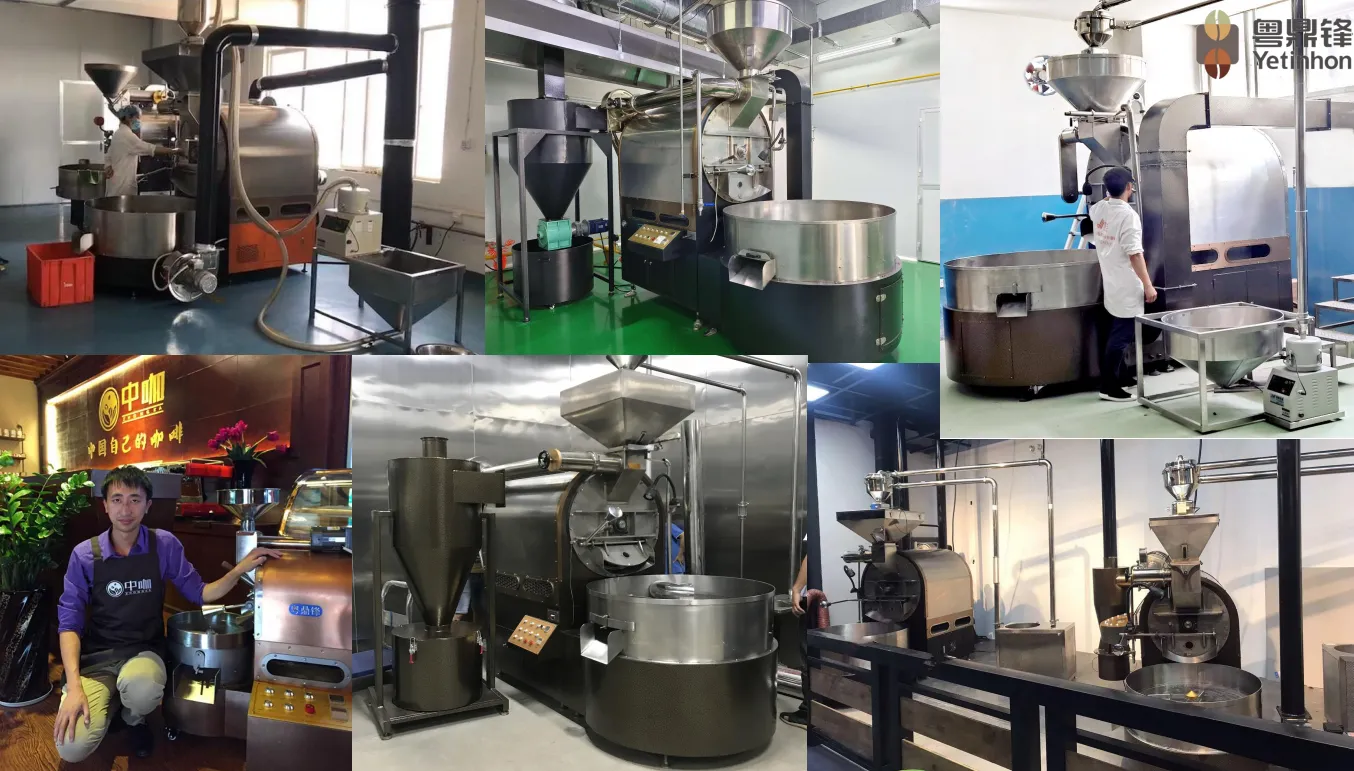
Installing commercial coffee roasting equipment is not simply a matter of "plugging it in." Whether it's a commercial hot-air coffee roaster or a high-capacity industrial-grade machine, strict adherence to electrical, safety, and exhaust regulations is essential to ensure consistent roasting quality and extend equipment lifespan.
Industry experience shows that site planning, ventilation system design, and professional installation are critical steps that cannot be overlooked before the equipment is put into operation.
Key Installation Steps for Commercial Coffee Roasters
1. Site Planning and Exhaust System
In any commercial roasting environment, space and ventilation are primary considerations.
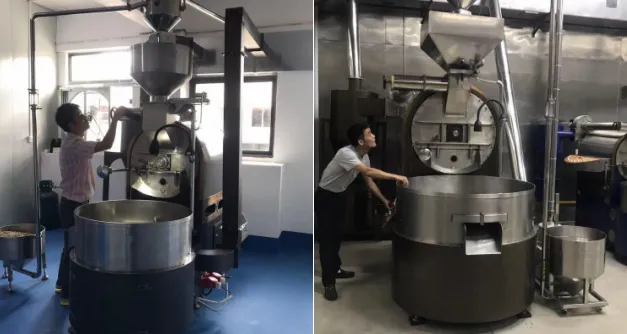
Commercial coffee roasters generate a significant amount of heat and chaff during operation. Therefore, it is recommended to use double-walled stainless steel exhaust pipes to improve heat resistance and reduce condensation problems. This is especially important for medium to large-scale commercial coffee roasting equipment.
2. Electrical and Gas Connections
• Commercial electric coffee roasters should have their voltage, current, and circuit breaker systems checked by a professional electrician to ensure compliance with local safety regulations.
• Gas-powered equipment requires professional personnel for pipe connection and leak detection.
This step is crucial not only for operational safety but also to prevent equipment damage and downtime caused by improper installation.
3. Parameter Calibration and Test Roasting
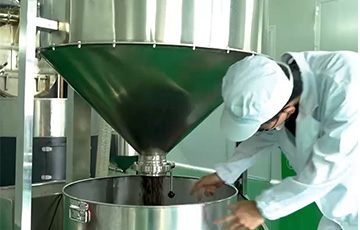
After installation, system calibration is essential, including airflow, rotation speed, and heating curve settings.
Even the best commercial coffee roasters require test roasting and fine-tuning to achieve consistent and reproducible flavor profiles.
How to Choose the Right Commercial Coffee Roasting Equipment
Coffee businesses of different sizes and stages of development have varying needs for roasting equipment:
• Small-batch commercial roasters (600–6kg)
Suitable for specialty coffee shops and micro-roasters, used for testing the market or developing new recipes, offering flexible operation and precise control.
• Medium-sized drum coffee roasters (10–30kg)
Achieves a good balance between capacity and control, suitable for growing roasting brands, enabling efficient and stable production.
• Large industrial-grade roasters (60kg and above)
Designed for large-scale production, featuring automated control systems and high durability, suitable for large roasting factories.
• Commercial hot air coffee roasters
Utilizes hot air fluidization technology, reducing contact between beans and metal, making it more suitable for coffee brands that pursue a clean and bright flavor profile.
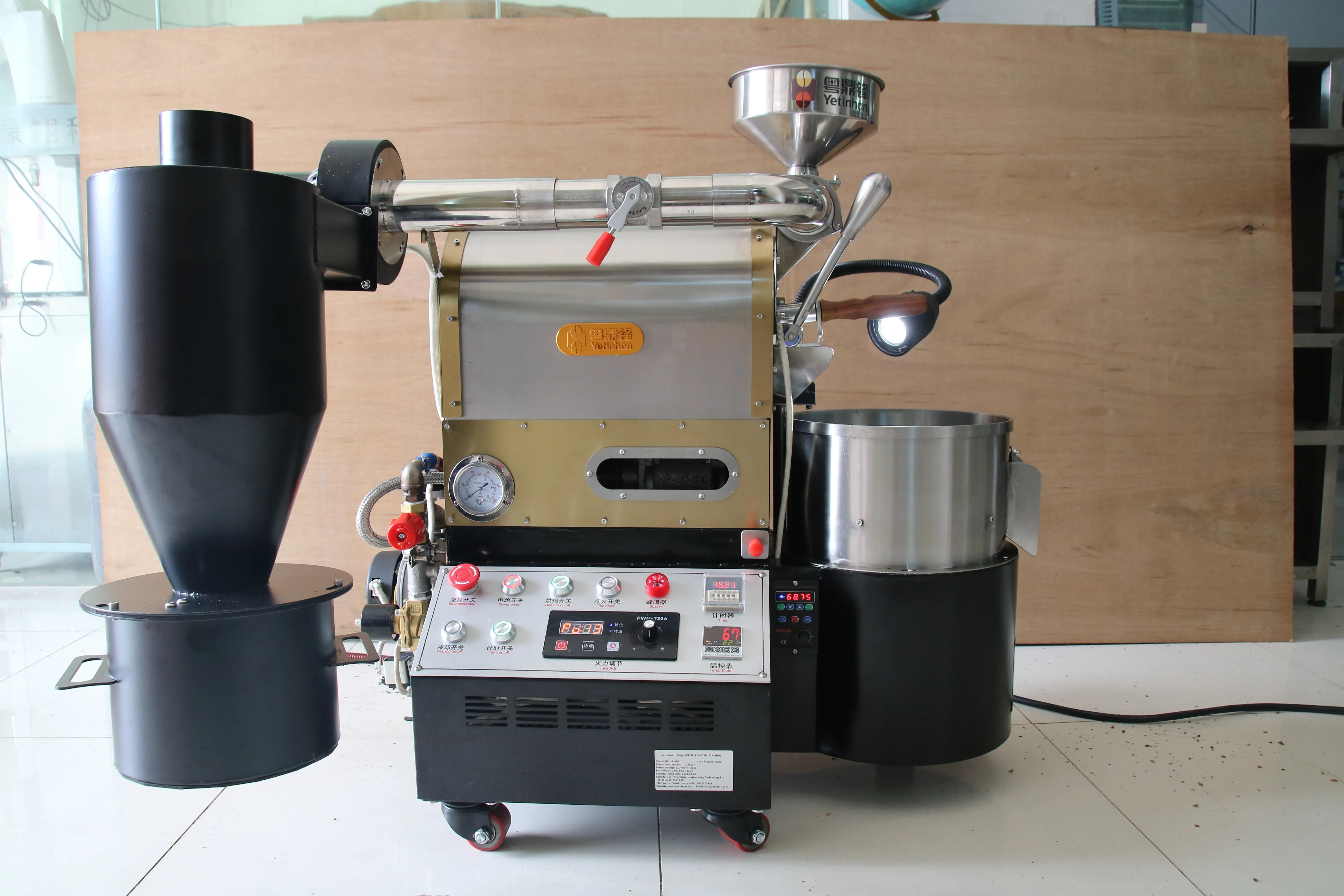
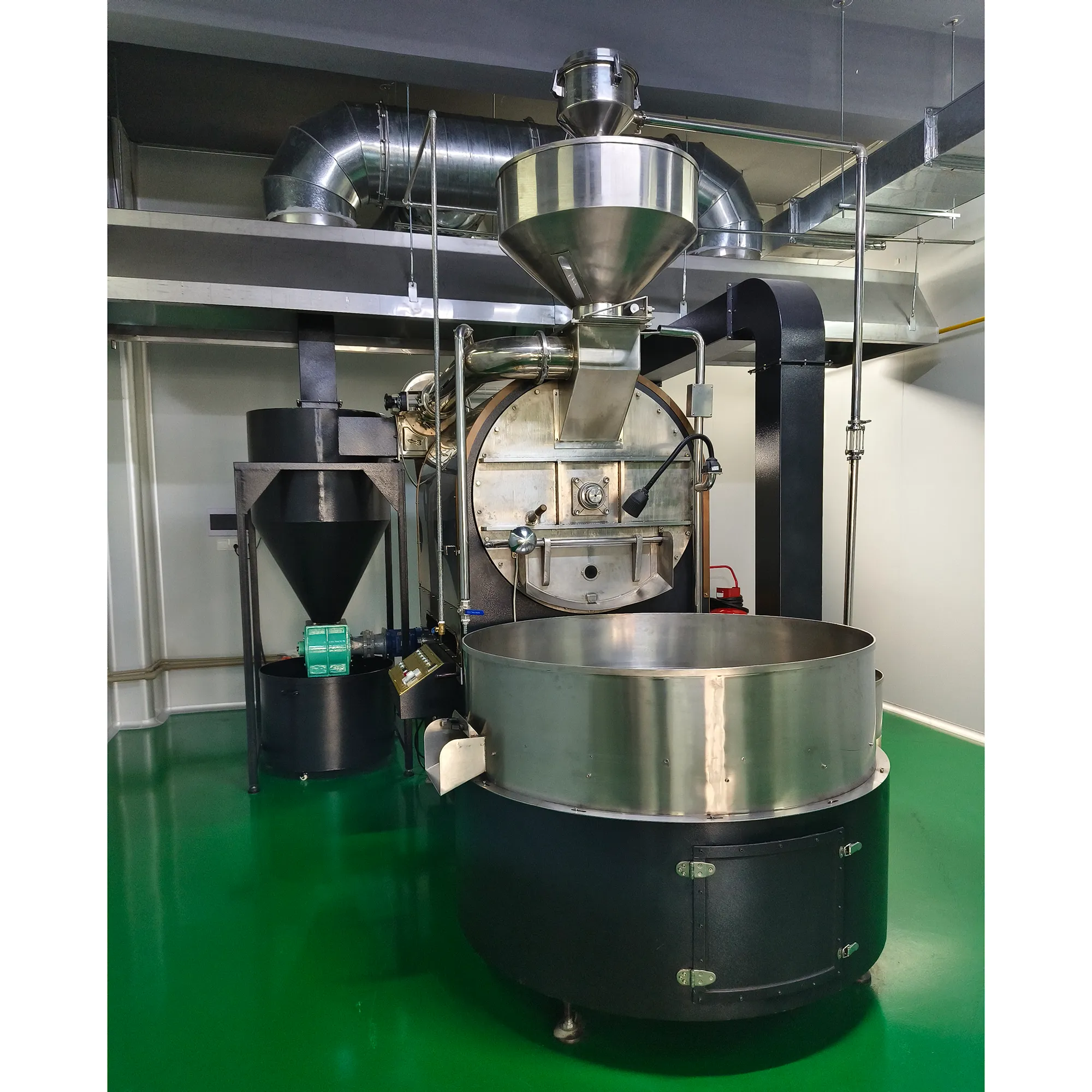
Representative Commercial Coffee Roasters on the Market
Currently, the market offers a wide variety of commercial coffee roasters, both electric and gas-powered, covering a range of needs from small-scale specialty roasting to industrial-level production.
Meanwhile, Yetinhon Coffee Roasters provides complete solutions, from small electric roasters to large automated systems, which can be customized according to different business models, helping coffee businesses achieve long-term sustainable development.
Conclusion: From Proper Installation to Long-Term Success
Purchasing a commercial coffee roaster is not just an equipment upgrade, but a strategic investment.
Only through proper installation, precise calibration, and continuous maintenance can coffee businesses truly unlock the full value of their commercial coffee bean roasters and stand out in a highly competitive market.

Related News




Contact US
Product Information
Quantity
Unit
Piece
Support order samples, customization, wholesale direct, and complete payment. If the product you look for does not have corresponding customized content, pls fill out the form below to contact us, and we will reply ASAP.