Welcome to Yetinhon

How Process From Coffee Cherries to Coffee Bean
How Process From Coffee Cherries to Coffee Bean
 07 Jan
How Process Coffee
Coffee processing is transforming coffee cherries into coffee beans that can be roasted and ground. It is one of the most important links in coffee production. The quality of the processing process directly affects the flavor and quality of coffee beans. Below two types are the main steps of coffee processing:
1. Picking Coffee Cherries
There are two ways to pick coffee cherries:
Hand picking: Workers manually select ripe coffee cherries to ensure that only fully ripe fruits are collected.

Mechanical picking: Using machines to pick quickly, but may mix in unripe or overripe cherries.
Hand picking is usually used for high-quality coffee, while mechanical picking is suitable for large-scale production.
2. Preliminary screening
The picked coffee cherries need to be screened to remove impurities. Common methods include:
Flux flotation: Put the coffee cherries in water, the ripe fruits sink to the bottom, and the unripe or damaged fruits float on the surface.
Manual screening: Screen the poor quality cherries by sight or touch.
3. Coffee processing methods
There are three main coffee processing methods: wet, dry and semi-dry.
Wet Processing (Washed Process)
Wet processing is a fine way to process coffee, which can highlight the acidity and fresh taste of coffee. The specific steps are as follows:
Peel removal: Use a machine to remove the outer peel and pulp of the coffee cherry.
Fermentation: Soak the coffee beans in water and remove the adhering pectin layer through natural fermentation.
Washing and drying: After washing, the coffee beans are air-dried or mechanically dried to a moisture content of about 12%.
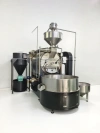
High effeciency huge quantity dry coffee bean using 60kgs, 80kgs, 120kgs Coffee Bean Roaster.

Dry Processing (Natural Processing)
Dry processing is a more traditional method, usually used to produce strong-flavored coffee. The specific steps are as follows:
Sun drying: Spread the coffee cherries directly in the sun to dry, turning them every day to prevent mold.
Hulling: The dried cherries are passed through a hulling machine to remove the peel and pulp.
Semi-dry processing (honey processing)
Semi-dry processing combines the characteristics of wet and dry methods, retaining part of the pectin layer, giving the coffee beans a sweet and complex flavor. The main steps include peel removal, partial washing and drying.
4. Hulling and grading
After drying, the beans need to be machined or hand-removed from the inner skin (sheepskin). Subsequently, the beans are graded according to size, density and appearance to ensure uniform quality.
5. Final processing
Polishing: The silver skin on the surface of the coffee beans can be selectively removed to make them smoother in appearance.
Sorting and packaging: Defective beans are sorted out manually or by machine, and the coffee beans are finally packaged for transportation or storage.
Related News







Contact US
Product Information
Quantity
Unit
Piece
Support order samples, customization, wholesale direct, and complete payment. If the product you look for does not have corresponding customized content, pls fill out the form below to contact us, and we will reply ASAP.